
The Vinyl Albums Revival: Why are we Falling in Love with Records Again?
In recent years, the UK has witnessed a remarkable resurgence in the popularity of vinyl records, a trend that has captivated both seasoned audiophiles and a new generation of music enthusiasts. According to the British Phonographic Industry (BPI), vinyl sales have reached levels not seen since the 1990s, with millions of records sold annually. This revival is not merely a fleeting fad; it represents a significant cultural shift as people increasingly seek tangible connections to their music.
Many of the “Top 100 best selling albums of all time” are available on vinyl
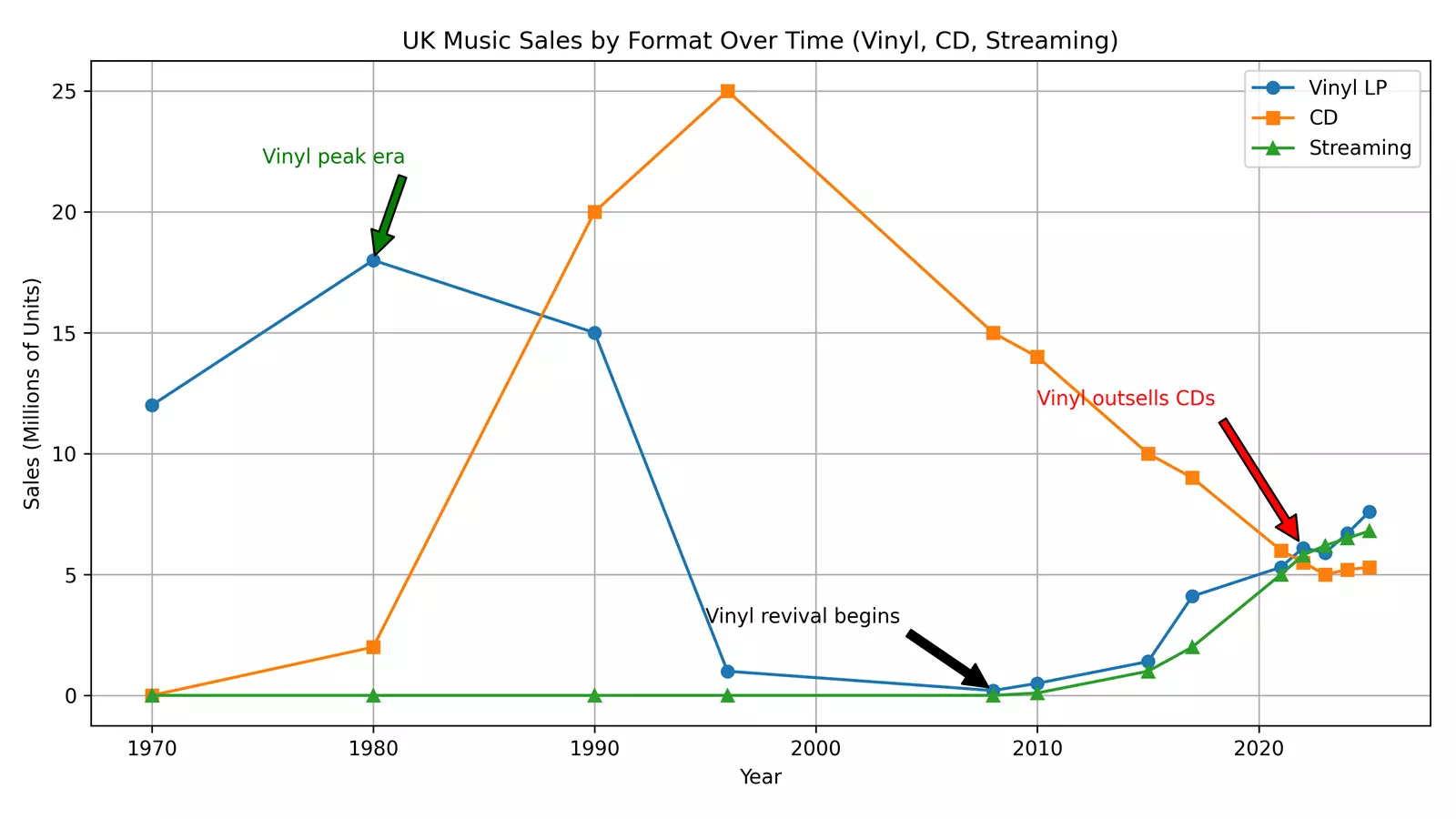
The allure of vinyl lies in its unique sound quality, which many argue surpasses that of digital formats, offering a warmth and depth that is often lost in compressed audio files. The growth of vinyl can also be attributed to the rise of independent record shops and pop-up markets across the UK. These venues have become community hubs where music lovers gather to share their passion for records.
Events such as Record Store Day have further bolstered this movement, drawing crowds eager to purchase exclusive releases and engage with fellow fans. The combination of nostalgia, community engagement, and a desire for authentic experiences has propelled vinyl into the mainstream, making it a staple in the lives of many.
Nostalgia plays a pivotal role in the vinyl revival, as many individuals find comfort in the familiar sounds of their youth. For older generations, vinyl records evoke memories of simpler times, when music was often experienced in a communal setting, such as family gatherings or parties. This emotional connection is powerful; it allows listeners to relive cherished moments while enjoying their favourite tracks.
Younger audiences, on the other hand, are drawn to vinyl for its retro aesthetic and the tactile experience it offers, contrasting sharply with the ephemeral nature of digital music consumption. Authenticity is another key factor driving the appeal of vinyl in modern Britain. In an age dominated by streaming services and algorithm-driven playlists, many music lovers yearn for a more genuine connection to their favourite artists.
Vinyl records provide a physical representation of music that digital formats cannot replicate. The large album artwork, the crackle of the needle on the record, and the ritual of flipping sides all contribute to a more immersive listening experience. This authenticity resonates deeply with consumers who are increasingly disillusioned by the impersonal nature of digital media.
Despite living in an era defined by digital technology, many Brits are embracing vinyl as a counterpoint to the convenience of streaming services. The act of purchasing and playing a record requires a level of engagement that is often absent from digital listening experiences. This intentionality fosters a deeper appreciation for music, encouraging listeners to explore entire albums rather than just individual tracks.
As a result, vinyl has become a medium through which people can rediscover artists and genres they may have overlooked in the past. Moreover, the resurgence of vinyl has prompted a renewed interest in music production and artistry. Artists are increasingly releasing their work on vinyl, recognising its value as a collector's item and a means of connecting with fans on a more personal level.
This trend has led to a flourishing market for limited edition releases and bespoke pressings, further enhancing the appeal of vinyl among consumers who appreciate unique and high-quality products. In this way, vinyl serves not only as a nostalgic artefact but also as a vibrant part of contemporary music culture.
From Collectors to Casual Listeners: The Diverse Audience for Vinyl in the UK
| Age Group | Percentage |
|---|---|
| 16-24 | 18% |
| 25-34 | 27% |
| 35-44 | 24% |
| 45-54 | 16% |
| 55-64 | 10% |
| 65+ | 5% |
The audience for vinyl records in the UK is remarkably diverse, encompassing everyone from dedicated collectors to casual listeners. Collectors often seek rare pressings or limited editions, driven by a passion for music history and an appreciation for the artistry involved in record production. These individuals frequently attend record fairs and auctions, where they can find hidden gems to add to their collections.
For them, vinyl is not just about music; it is about preserving cultural heritage and celebrating the artistry behind each release. Conversely, casual listeners are drawn to vinyl for its aesthetic appeal and the experience it offers. Many young people are purchasing turntables for the first time, motivated by a desire to create a unique atmosphere in their homes or to impress friends with their eclectic taste in music.
This demographic often gravitates towards popular albums or contemporary artists who release their work on vinyl. As such, the vinyl revival has successfully bridged generational gaps, uniting people from different backgrounds through a shared love for music.
The Vinyl Experience: Rediscovering the Joy of Physical Music in Britain
The experience of listening to vinyl records is inherently different from that of digital formats, offering a sensory journey that many find deeply satisfying. The tactile nature of handling records, removing them from their sleeves, placing them on turntables, and carefully lowering the needle creates an intimate connection between the listener and the music. This ritualistic approach encourages individuals to slow down and savour each track, fostering a more profound appreciation for the artistry involved.
Moreover, vinyl records often come with larger album artwork and printed inserts that enhance the overall experience. Many listeners enjoy exploring the visual elements that accompany their favourite albums, from iconic cover designs to detailed liner notes that provide insights into the creative process behind each song. This physicality contrasts sharply with digital music consumption, where album art is often reduced to thumbnail images on screens.
The Impact of Vinyl on the Music Industry: How Records are Shaping the Market
The resurgence of vinyl has had a significant impact on the music industry, reshaping how artists release their work and how labels approach marketing strategies. As sales of vinyl records continue to rise, many record labels are investing more resources into producing high-quality pressings and promoting them effectively. This shift has led to an increase in collaborations between artists and independent labels that focus on creating unique vinyl experiences for fans.
Additionally, the growing demand for vinyl has prompted artists to consider their releases more holistically. Many now view albums as cohesive works of art rather than just collections of songs. This perspective encourages musicians to craft albums that tell stories or explore themes in depth, resulting in richer listening experiences for fans.
As such, vinyl is not only revitalising sales but also influencing artistic expression within the industry.
The Future of Vinyl: Examining the Longevity of the Revival in Britain
As we look towards the future, it appears that the revival of vinyl in Britain is not merely a passing trend but rather an enduring movement with staying power. While digital formats will undoubtedly continue to dominate music consumption due to their convenience, there remains a strong desire among many consumers for physical products that offer authenticity and connection. The ongoing success of independent record shops and events dedicated to vinyl culture suggests that this revival will continue to thrive.
Moreover, as new generations discover the joys of vinyl listening, it is likely that interest will only grow. Educational initiatives aimed at teaching young people about music history and production can further solidify this trend by fostering appreciation for analog formats. Ultimately, while challenges may arise in an ever-evolving digital landscape, the enduring appeal of vinyl records ensures that they will remain an integral part of Britain's musical fabric for years to come.